The Digital Revolution Reaches the Open Sea
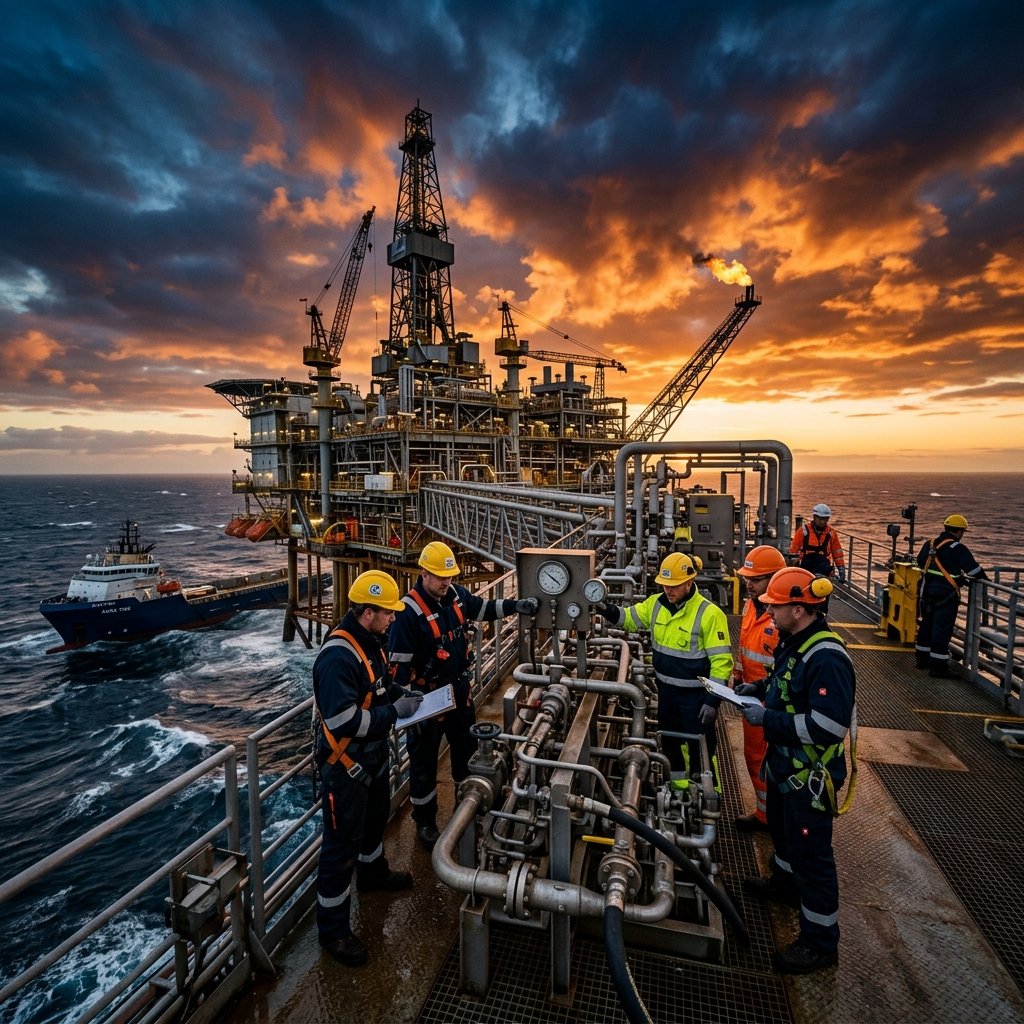
Offshore platforms have always operated at the frontier of engineering. Remote locations, extreme environmental conditions, and the critical nature of operations demand constant innovation. Today, that frontier is being redefined once more — not by new materials or deeper drills, but by data.
The integration of Industrial Internet of Things (IIoT) sensors, digital twin technology, and AI-driven predictive maintenance is fundamentally changing how offshore assets are designed, monitored, and managed.
What Are Digital Twins?
A digital twin is a real-time virtual replica of a physical asset — in this case, an offshore platform. Fed by thousands of sensors measuring pressure, temperature, structural loads, and equipment performance, the digital twin mirrors what is happening on the platform at any given moment.
This means engineers can:
- Simulate failure scenarios without interrupting production
- Run maintenance models before deploying technicians
- Optimize production workflows by testing configurations virtually
- Reduce unplanned downtime through predictive alerts
Real-World Impact: A Case Study Perspective
Platforms implementing predictive maintenance backed by digital twins are reporting unplanned downtime reductions of up to 30%. For a deepwater production asset generating $1M+ per day, that translates directly to tens of millions in recovered revenue annually.
Beyond operational uptime, the safety benefits are equally significant. Digital twins enable continuous structural health monitoring — detecting micro-fractures or fatigue stress points in structural members before they become critical failures.
The Role of AI in Offshore Operations
Machine learning models trained on historical failure data can now identify patterns in sensor readings that precede equipment failures — often weeks before a failure would be detectable by conventional inspection.
SSCG’s engineering teams work alongside operators to:
- Deploy edge computing nodes on platforms for low-latency AI inference
- Integrate multi-system sensor data into unified operational dashboards
- Train AI models on platform-specific historical maintenance data
- Establish alert frameworks that distinguish noise from genuine anomaly signals
What’s Next: Autonomous Inspection Systems
The next evolution is already underway. Underwater remotely operated vehicles (ROVs) and aerial drones equipped with computer vision are beginning to perform routine inspections autonomously — drastically reducing the need for high-risk human intervention in hazardous zones.
SSCG’s Offshore Division is at the forefront of integrating these technologies into comprehensive asset integrity management programs for clients across the Gulf of Mexico and Latin American energy markets.
For more information on SSCG’s offshore engineering and technology integration services, contact our technical advisory team.